Yasuhara Madoka 180 Circular Fisheye Lens
The Yasuhara 180 is a 7.3mm f/4 lens designed for Sony E mount cameras. Used copies start from $183.26 on GearFocus, with buyer protection on every purchase.
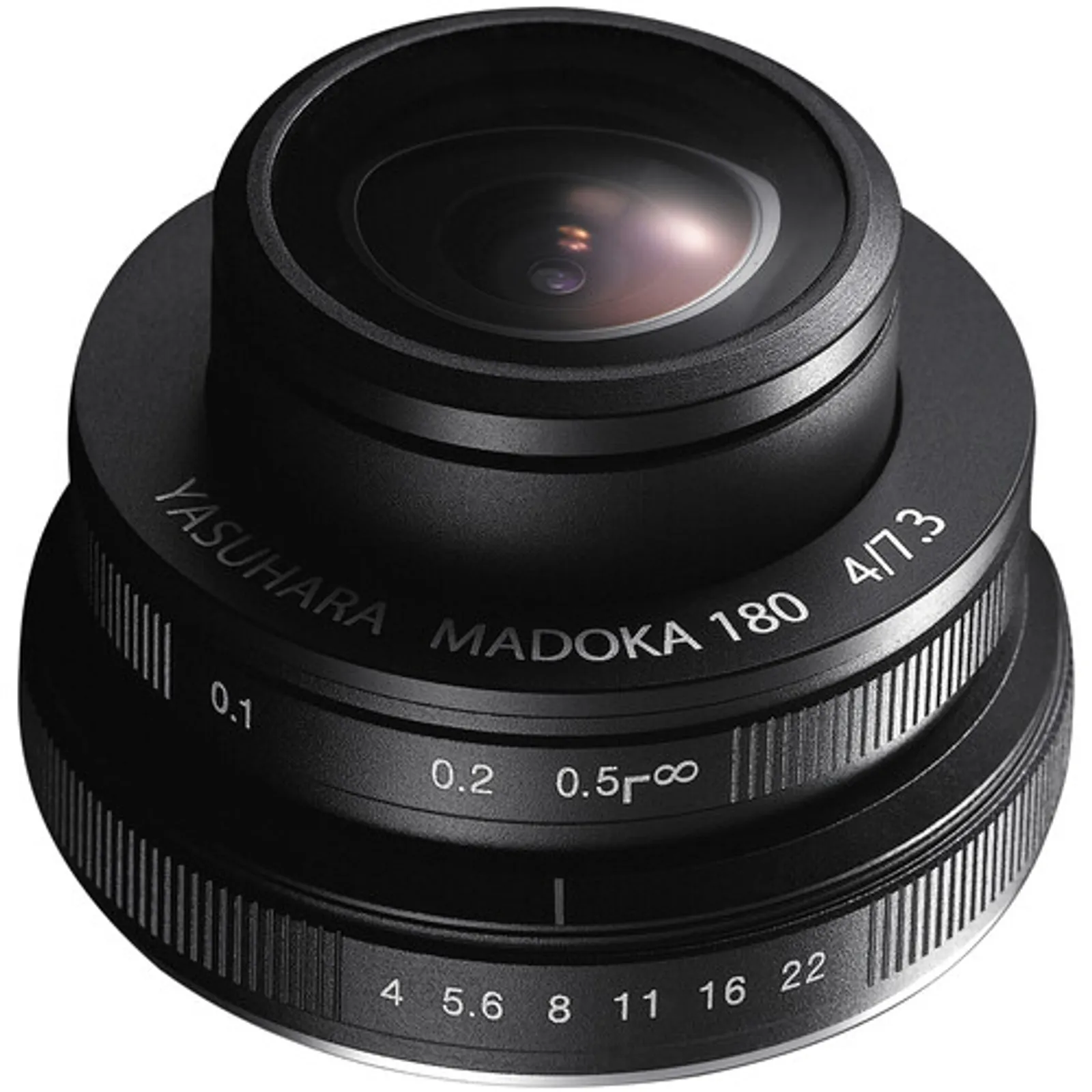
Yasuhara Madoka 180 Circular Fisheye Lens


Used Yasuhara 180 Listings on GearFocus
Lens Overview — Yasuhara 180
Key Features — Yasuhara 180
7.3mm Circular Fisheye: Delivers a full 180-degree circular fisheye image on APS-C sensors, producing a distinctive sphere-within-frame effect.
Sony E Mount, APS-C: Designed specifically for Sony E mount mirrorless cameras with APS-C sensors, ensuring proper full circular coverage.
f/4 Maximum Aperture: Fixed maximum aperture of f/4, typical for circular fisheye designs of this type.
Manual Focus Only: No autofocus motor — the focus ring puts full, deliberate control in the photographer's hands.
Compact 200g Build: Lightweight construction pairs naturally with compact Sony mirrorless bodies without adding significant bulk.
No Filter Thread: The extreme curved front element geometry precludes standard screw-on filters, as is common with circular fisheye lenses.
Lens Specifications — Yasuhara 180
| Spec | Detail |
|---|---|
| Use Cases | Astrophotography, Creative Effects |
| Lens Type | Fisheye |
| Format | APS-C |
| Zoom/Prime | Prime |
| Focal Length | 7.3mm |
| Maximum Aperture | f/4 |
| Camera System | Mirrorless |
| Lens Mount | Sony E |
| Autofocus | No |
| Focus Type | Manual Focus |
| Image Stabilization | None |
| Weight | 200g |
Description — Yasuhara 180
The Yasuhara Madoka 180 is a 7.3mm prime fisheye lens built for Sony E mount mirrorless cameras with APS-C sensors. It produces circular fisheye imagery with a sweeping 180-degree field of view, creating a visually distinctive look that sets it apart from standard wide-angle options. At 200 grams, it is a genuinely lightweight addition to any mirrorless kit, adding minimal bulk while delivering a highly specialized perspective.
The lens operates with manual focus only — there is no autofocus system — placing deliberate creative control firmly with the photographer. The maximum aperture is f/4, and the lens carries no image stabilization. There is no filter thread, which is consistent with the protruding front element geometry common to circular fisheye designs.
Categorized as a wide-angle prime in the fisheye type, the Madoka 180 is a purpose-built creative lens for photographers interested in exploring the expressive potential of full circular fisheye imagery on the Sony E mount platform.
Pros — Yasuhara 180
- ✓Compact and lightweight at just 200g, well-suited for Sony E mount mirrorless bodies
- ✓7.3mm focal length delivers a full 180-degree circular fisheye field of view
- ✓Dedicated APS-C lens format ensures proper coverage on compatible Sony E mount sensors
Cons — Yasuhara 180
- ✗Manual focus only — no autofocus support for fast-moving subjects
- ✗Maximum aperture of f/4 limits low-light flexibility
- ✗No image stabilization, which can challenge handheld shooting in dim conditions
Reviews — Yasuhara 180
Videos — Yasuhara 180
Yasuhara Madoka 7.3mm Fisheye Lens Review — Arthur R
Frequently Asked Questions — Yasuhara 180
What camera mount does the Yasuhara Madoka 180 use?+
The Madoka 180 is designed for the Sony E mount. It is compatible with Sony E mount mirrorless cameras using APS-C format sensors.
Does the Madoka 180 have autofocus?+
No, the Madoka 180 is a manual focus lens. There is no autofocus system, so the photographer must focus manually at all times.
What is the maximum aperture of this lens?+
The Madoka 180 has a maximum aperture of f/4. This is the widest setting available on this lens.
Can I use filters with the Yasuhara Madoka 180?+
No, the Madoka 180 does not have a filter thread, so standard screw-in filters cannot be attached directly to the lens.
How heavy is the Yasuhara Madoka 180?+
The lens weighs 200 grams, making it a compact and lightweight option that complements the portability of Sony E mount mirrorless systems.
Does the Madoka 180 have image stabilization?+
No, the Madoka 180 does not include image stabilization. Photographers should account for this when shooting in lower light or at slower shutter speeds.