RED V-RAPTOR XE: What It Means for Filmmakers and the Used Camera Market
GearFocus
Sep 15, 2025

Key Takeaways
- The RED V-RAPTOR XE delivers flagship-level image quality in a more accessible body.
- It’s built for owner-operators and boutique houses who need cinema-grade results without overspending on a full Raptor [X].
- Not everyone should buy it—budget shooters and run-and-gun filmmakers will find more value in the used market.
- The used market is about to flood with Komodos, DSMC2 bodies, and even Raptors, creating real opportunities for buyers.
- Smart money right now? Sell DSMC2s, hold Komodos lightly, and watch for Komodo-X and Canon/Sony mid-tier bargains.
When RED releases a camera, it’s never just a spec sheet moment. It’s a market shockwave. The company’s DNA is built on disruption—remember when RED’s original ONE promised to put digital cinema in the hands of independents back in 2007? Since then, every new body out of Irvine has sent ripples across the industry. Hollywood adopts, YouTubers drool, indie filmmakers recalculate, and the used gear market reshuffles like a deck of cards.
![Key Takeaways The RED V-RAPTOR XE delivers flagship-level image quality in a more accessible body. It’s built for owner-operators and boutique houses who need cinema-grade results without overspending on a full Raptor [X]. Not everyone should buy it—budget shooters and run-and-gun filmmakers will find more value in the used market. The used market is about to flood with Komodos, DSMC2 bodies, and even Raptors, creating real opportunities for buyers. Smart money right now? Sell DSMC2s, hold Komodos lightly, and watch for Komodo-X and Canon/Sony mid-tier bargains. When RED releases a camera, it’s never just a spec sheet moment. It’s a market shockwave. The company’s DNA is built on disruption—remember when RED’s original ONE promised to put digital cinema in the hands of independents back in 2007? Since then, every new body out of Irvine has sent ripples across the industry. Hollywood adopts, YouTubers drool, indie filmmakers recalculate, and the used gear market reshuffles like a deck of cards. The RED V-RAPTOR XE is exactly that kind of release. It’s not the flagship V-RAPTOR [X]—but it carries enough of its DNA to matter. Enough to pull new creators into RED’s orbit. Enough to make current RED owners nervous about resale values. Enough to make someone eye their Komodo or DSMC2 on the shelf and think: is now the time to sell? So let’s break down what the V-RAPTOR [X]E actually is, who it’s built for, who it’s not, and why the used cinema camera market is about to get more interesting than it’s been in years. Where the V-RAPTOR XE Fits in RED’s Cinema Lineup To understand the XE, you have to understand the strategy. The V-RAPTOR [X] is RED’s current top dog—an 8K VV + S35 global shutter beast with all the bells, whistles, and I/O options you’d expect on a flagship built for serious Hollywood productions. The V-RAPTOR XE takes that sensor, that image science, and that global shutter tech—and trims the fat. Fewer pro I/O options. Less expandability. A smaller, more stripped-down body. Think of it as a “streamlined” Raptor: the same bones, the same heart, but without some of the muscle that rental houses or large-scale crews demand. Why does this matter? Because RED knows not everyone shooting commercials, Netflix originals, or high-end branded content needs the full production rig. They need the image. They need the future-proof workflow. But they don’t always need (or want to pay for) the redundancy and versatility that the big-boy Raptor provides. In other words: the XE is RED making its next-gen tech accessible—not to everyone, but to a wider swath of working filmmakers than the Raptor [X] alone could reach. Who Is the V-RAPTOR XE Really For? The XE is not a democratization play like the original Komodo. It’s still a premium tool. But it’s targeted at a very specific slice of the market: Owner-operators who live in the mid-tier production space. The kind of DP who shoots commercials for fashion brands, high-end YouTube productions, or docu-style work for streamers. They need cinema-grade images but don’t have a full rental budget every time. Boutique production houses that want to own their own A-cam instead of renting. For these teams, the XE is a long-term investment—a camera that can cover narrative, commercial, and branded work for years. Crossover creators who are moving from Canon/Sony cinema systems into RED. The XE provides a relatively softer entry point into the ecosystem than the flagship, while still keeping them on the cutting edge. Streaming-era filmmakers. Platforms like Netflix, Apple, and Amazon have strict camera approval lists. The XE, with its global shutter 8K sensor, checks every box—and positions itself as a “future-proof” option for content that will live in 4K HDR or higher for decades. This is a camera for people making money with their gear. It’s not for hobbyists, and it’s not for beginners. It’s for those in the middle lane of pro cinema, who don’t need to flex with the most expensive body, but also can’t afford to compromise on image quality or post-production flexibility. Who Should Probably Skip the V-RAPTOR XE Let’s be real: not every shiny new RED is for everyone. Run-and-gun shooters. If you’re a documentary filmmaker, event shooter, or one-person band who values speed over everything else, the XE is going to slow you down. It’s not designed to be grab-and-go. It wants to live on rigs, with accessories, and in workflows that expect dedicated DIT time. Budget-conscious indie filmmakers. Even though it’s cheaper than the Raptor [X], the XE is still a serious financial commitment. For the same money—or less—you could build an entire kit around a Sony FX9, Canon C300 Mark III, or Blackmagic URSA 12K. And with the used market heating up, those options are about to get even more appealing. Existing Raptor [X] owners. If you already bought into RED’s flagship, the XE doesn’t bring anything new enough to justify a switch. Unless you’re downsizing for portability, it’s not going to shift your ecosystem. Anyone who doesn’t need 8K VV. If your clients aren’t demanding 8K, if your delivery is still HD or 4K, or if your post workflow struggles with heavy data, the XE may be overkill. You’ll pay for horsepower you don’t actually use. Why the Used Market Just Got More Interesting Here’s where things get fun. Every time RED launches a new body, a familiar cycle plays out: early adopters sell older cameras to fund the upgrade, rental houses rotate stock, and gear that was once unattainable suddenly becomes very available on the used market. The XE is no different. In fact, because it slots below the flagship, its release widens the funnel—causing movement both at the top (among Raptor [X] and DSMC2 owners) and the bottom (among Komodo users eyeing a step up). Let’s map it: Komodo owners who’ve been itching to level up will see the XE as their shot. That means more Komodos hitting the used market—good news for indie shooters who’ve had their eye on one. DSMC2 owners (Helium, Gemini, Dragon-X) will feel the squeeze. With RED pushing global shutter and VV/S35 hybrid shooting as the future, DSMC2 bodies may take the steepest resale hit yet. If you’re holding one, the clock is ticking. Komodo-X sits in the middle. Some buyers will skip straight from Komodo to XE, softening Komodo-X demand. That dip could make it a sweet spot for shooters who don’t need the XE but want something more advanced than the OG Komodo. Canon and Sony’s mid-tier cinema cameras will see indirect ripple effects. As more shooters chase RED’s XE, prices on Canon C70s, C300s, Sony FX6s, and FX9s will likely slip, making them attractive alternatives for filmmakers priced out of RED’s ecosystem. What to Sell Right Now RED DSMC2 bodies (Helium, Gemini, Dragon-X). These are losing ground fast. If you’ve been holding one for sentimental reasons, now’s the time to list it before values crater further. RED Komodo (original). Still beloved, but once XE units hit circulation, buyers will compare aggressively. Better to sell while Komodo is still hot. Older rolling shutter cinema bodies. RED is setting the tone: global shutter is the future. Demand for rolling shutter systems is only going down from here. What to Buy Right Now RED Komodo-X. Expect a softening in prices as the XE grabs attention. For indie filmmakers, this is the real bargain. Used V-RAPTOR (non-XE). Some owners will sell their Raptors to “downgrade” into the XE for portability or budget reasons. That means discounted full-fat Raptors in the used market. Canon C70 / C300 Mark III. Expect modest dips as some buyers migrate toward RED. A great time to snag Canon’s color science and dual gain output sensors. Sony FX6 / FX9. These workhorses remain strong, but used prices will likely drop as attention pivots to RED’s new release. The Bigger Picture: RED, Streaming, and the Democratization of 8K What’s really happening here isn’t just a new camera—it’s a shift in cinema accessibility. The XE represents RED’s acknowledgment that streaming is the new cinema. Theatrical releases still matter, but the bulk of high-end production now ends up on Netflix, Amazon, Disney+, or Apple TV+. And these platforms demand future-proof, uncompromising masters. The XE says: you don’t need to be a Marvel studio film to shoot on a RED. You can be a boutique house in Brooklyn producing six-episode branded docs for a sneaker company. You can be a YouTube collective producing 8K HDR lifestyle series for Samsung. You can be a mid-tier agency shooting automotive commercials that live mostly online. That’s the cultural shift. RED is democratizing its flagship tech without cheapening the brand. It’s threading the needle between prestige and accessibility. And in doing so, it’s forcing Canon, Sony, and Blackmagic to rethink their own strategies for this space.](https://b.storage.refocus.store/2025/09/9441d210-image-1-845x1024.png)
The RED V-RAPTOR XE is exactly that kind of release. It’s not the flagship V-RAPTOR [X]—but it carries enough of its DNA to matter. Enough to pull new creators into RED’s orbit. Enough to make current RED owners nervous about resale values. Enough to make someone eye their Komodo or DSMC2 on the shelf and think: is now the time to sell?
So let’s break down what the RED V-RAPTOR XE actually is, who it’s built for, who it’s not, and why the used cinema camera market is about to get more interesting than it’s been in years.
Where the V-RAPTOR XE Fits in RED’s Cinema Lineup
To understand the XE, you have to understand the strategy. The V-RAPTOR [X] is RED’s current top dog—an 8K VV + S35 global shutter beast with all the bells, whistles, and I/O options you’d expect on a flagship built for serious Hollywood productions.
The V-RAPTOR XE takes that sensor, that image science, and that global shutter tech—and trims the fat. Fewer pro I/O options. Less expandability. A smaller, more stripped-down body. Think of it as a “streamlined” Raptor: the same bones, the same heart, but without some of the muscle that rental houses or large-scale crews demand.
Why does this matter? Because RED knows not everyone shooting commercials, Netflix originals, or high-end branded content needs the full production rig. They need the image. They need the future-proof workflow. But they don’t always need (or want to pay for) the redundancy and versatility that the big-boy Raptor provides.
In other words: the XE is RED making its next-gen tech accessible—not to everyone, but to a wider swath of working filmmakers than the Raptor [X] alone could reach.
Who Is the V-RAPTOR XE Really For?

— a camera built for efficiency, speed, and uncompromising image quality.
The XE is not a democratization play like the original Komodo. It’s still a premium tool. But it’s targeted at a very specific slice of the market:
- Owner-operators who live in the mid-tier production space. The kind of DP who shoots commercials for fashion brands, high-end YouTube productions, or docu-style work for streamers. They need cinema-grade images but don’t have a full rental budget every time.
- Boutique production houses that want to own their own A-cam instead of renting. For these teams, the XE is a long-term investment—a camera that can cover narrative, commercial, and branded work for years.
- Crossover creators who are moving from Canon/Sony cinema systems into RED. The XE provides a relatively softer entry point into the ecosystem than the flagship, while still keeping them on the cutting edge.
- Streaming-era filmmakers. Platforms like Netflix, Apple, and Amazon have strict camera approval lists. The XE, with its global shutter 8K sensor, checks every box—and positions itself as a “future-proof” option for content that will live in 4K HDR or higher for decades.
This is a camera for people making money with their gear. It’s not for hobbyists, and it’s not for beginners. It’s for those in the middle lane of pro cinema, who don’t need to flex with the most expensive body, but also can’t afford to compromise on image quality or post-production flexibility.
Who Should Probably Skip the V-RAPTOR XE

pushing filmmakers to rethink how they shoot and what gear they keep.
Let’s be real: not every shiny new RED is for everyone.
- Run-and-gun shooters. If you’re a documentary filmmaker, event shooter, or one-person band who values speed over everything else, the XE is going to slow you down. It’s not designed to be grab-and-go. It wants to live on rigs, with accessories, and in workflows that expect dedicated DIT time.
- Budget-conscious indie filmmakers. Even though it’s cheaper than the Raptor [X], the XE is still a serious financial commitment. For the same money—or less—you could build an entire kit around a Sony FX9, Canon C300 Mark III, or Blackmagic URSA 12K. And with the used market heating up, those options are about to get even more appealing.
- Existing Raptor [X] owners. If you already bought into RED’s flagship, the XE doesn’t bring anything new enough to justify a switch. Unless you’re downsizing for portability, it’s not going to shift your ecosystem.
- Anyone who doesn’t need 8K VV. If your clients aren’t demanding 8K, if your delivery is still HD or 4K, or if your post workflow struggles with heavy data, the XE may be overkill. You’ll pay for horsepower you don’t actually use.
Why the Used Market Just Got More Interesting
Here’s where things get fun. Every time RED launches a new body, a familiar cycle plays out: early adopters sell older cameras to fund the upgrade, rental houses rotate stock, and gear that was once unattainable suddenly becomes very available on the used market.
The XE is no different. In fact, because it slots below the flagship, its release widens the funnel—causing movement both at the top (among Raptor [X] and DSMC2 owners) and the bottom (among Komodo users eyeing a step up).
Let’s map it:
- Komodo owners who’ve been itching to level up will see the XE as their shot. That means more Komodos hitting the used market—good news for indie shooters who’ve had their eye on one.
- DSMC2 owners (Helium, Gemini, Dragon-X) will feel the squeeze. With RED pushing global shutter and VV/S35 hybrid shooting as the future, DSMC2 bodies may take the steepest resale hit yet. If you’re holding one, the clock is ticking.
- Komodo-X sits in the middle. Some buyers will skip straight from Komodo to XE, softening Komodo-X demand. That dip could make it a sweet spot for shooters who don’t need the XE but want something more advanced than the OG Komodo.
- Canon and Sony’s mid-tier cinema cameras will see indirect ripple effects. As more shooters chase RED’s XE, prices on Canon C70s, C300s, Sony FX6s, and FX9s will likely slip, making them attractive alternatives for filmmakers priced out of RED’s ecosystem.
What to Sell Right Now
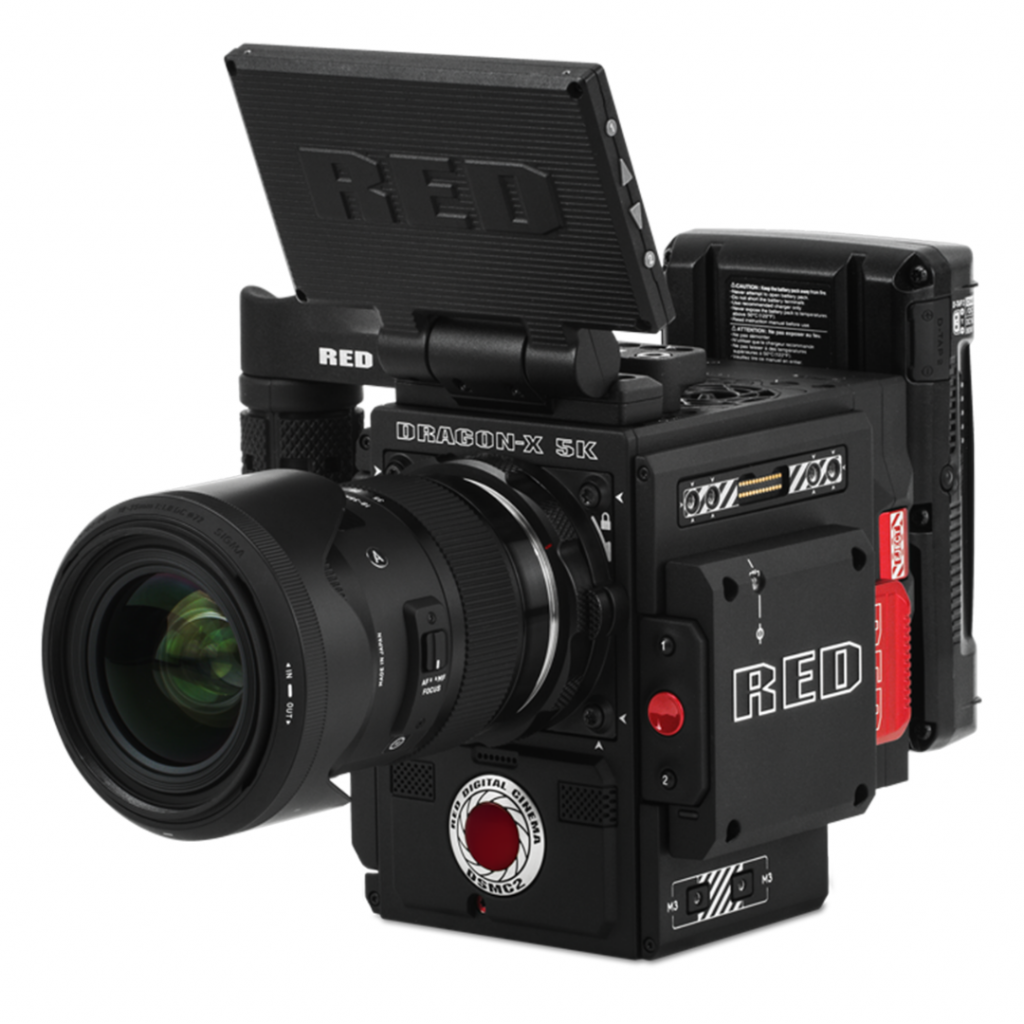
- RED DSMC2 bodies (Helium, Gemini, Dragon-X). These are losing ground fast. If you’ve been holding one for sentimental reasons, now’s the time to list it before values crater further.
- RED Komodo (original). Still beloved, but once XE units hit circulation, buyers will compare aggressively. Better to sell while Komodo is still hot.
- Older rolling shutter cinema bodies. RED is setting the tone: global shutter is the future. Demand for rolling shutter systems is only going down from here.
What to Buy Right Now

perfect for filmmakers who want RED performance without the full-scale setup.
- RED Komodo-X. Expect a softening in prices as the XE grabs attention. For indie filmmakers, this is the real bargain.
- Used V-RAPTOR (non-XE). Some owners will sell their Raptors to “downgrade” into the XE for portability or budget reasons. That means discounted full-fat Raptors in the used market.
- Canon C70 / C300 Mark III. Expect modest dips as some buyers migrate toward RED. A great time to snag Canon’s color science and dual gain output sensors.
- ARRI Alexa Mini. The Alexa brand name still carries weight, but as productions shift toward lighter, more affordable systems like the V-Raptor XE, the resale market for first-gen Alexa Minis could see a soft dip.
The Bigger Picture: RED, Streaming, and the Democratization of 8K
What’s really happening here isn’t just a new camera—it’s a shift in cinema accessibility.
The XE represents RED’s acknowledgment that streaming is the new cinema. Theatrical releases still matter, but the bulk of high-end production now ends up on Netflix, Amazon, Disney+, or Apple TV+. And these platforms demand future-proof, uncompromising masters.
The XE says: you don’t need to be a Marvel studio film to shoot on a RED. You can be a boutique house in Brooklyn producing six-episode branded docs for a sneaker company. You can be a YouTube collective producing 8K HDR lifestyle series for Samsung. You can be a mid-tier agency shooting automotive commercials that live mostly online.
That’s the cultural shift. RED is democratizing its flagship tech without cheapening the brand. It’s threading the needle between prestige and accessibility. And in doing so, it’s forcing Canon, Sony, and Blackmagic to rethink their own strategies for this space.
Own one like this?
Make room for new gear in minutes.
